

 English
 عربى


Industry News
Home / News / Industry News / Textile Dyeing Auxiliaries: Understanding Their Role in Wet Processing | Shanghai Yuanhong
Textile Dyeing Auxiliaries: Understanding Their Role in Wet Processing | Shanghai Yuanhong
2026-10-30
Content
- 1 Why Textile Dyeing Auxiliaries Are Indispensable
- 2 The Core Categories of Dyeing Auxiliaries
- 3 pH Control and Level Dyeing: Getting the Basics Right
- 4 Cleaning and Soaping: The Key to Fastness
- 5 Fixing Agents and Fastness Improvers
- 6 Selecting the Right Auxiliaries: A Supplier’s Practical Advice
- 7 Toward a Smarter, More Sustainable Dyeing Process
For textile mills and dyehouses, producing consistent, high-quality colored fabric is never just about the dye. Dyeing auxiliaries play a supporting yet decisive role in nearly every stage of wet processing. They regulate pH, slow down or accelerate dye uptake, prevent creases, disperse impurities, and lock color into the fiber. Without a well-designed auxiliaries program, even the best dye will struggle to deliver level shades, reliable fastness, and efficient production cycles.
With years of experience in textile chemical research and production, we have seen how choosing the right dyeing auxiliaries can transform a problematic process into a stable one. In this guide, we break down the main categories of textile dyeing auxiliaries, the functions they perform, and the considerations that matter when building a robust chemical system for your dyehouse.
Why Textile Dyeing Auxiliaries Are Indispensable
Modern dyeing operates under demanding conditions: high temperatures, high pressure, and precise chemical balances. Dye molecules rarely behave perfectly on their own. They may exhaust too quickly, aggregate in solution, or fail to penetrate dense fabric structures. Auxiliaries correct these behaviors by modifying the environment of the dye bath or the surface chemistry of the fiber.
The primary goals of using auxiliaries can be summarized into four key functions:
- Uniformity: Ensuring level dye uptake across the fabric surface and throughout each batch.
- Control: Managing dye bath pH, temperature sensitivity, and exhaustion rates to prevent defects.
- Protection: Shielding fibers from mechanical stress, excessive alkalinity, or unwanted interactions with water hardness.
- Fastness: Improving wash, rub, and light fastness through effective soaping and fixing.
Each function requires a specific chemical class, and most dyeing processes will use several auxiliaries in combination. A well-formulated recipe balances these components to achieve both quality and productivity. For a closer look at how a complete chemical line fits into the dyeing stage, you can explore our textile dyeing auxiliaries range.
The Core Categories of Dyeing Auxiliaries
To understand how auxiliaries work in practice, it helps to organize them by their role in the dyeing sequence. The table below outlines the main categories, their typical functions, and common examples from commercial product lines.
| Auxiliary Category | Primary Function | Example Conditions Addressed |
|---|---|---|
| pH regulators & acid donors | Maintain controlled acidity in the dye bath | Dyeing nylon or wool with acid dyes |
| Leveling agents | Promote uniform dye exhaustion | Uneven shade on nylon or acrylic fibers |
| Dispersing & chelating agents | Prevent dye aggregation and metal ion interference | Hard water or disperse dye sensitivity |
| Anti-crease & lubricating agents | Protect fabric from crease marks and abrasion | Rope dyeing in jet machines |
| Soaping & washing agents | Remove unfixed dye after dyeing | Poor wash fastness on cellulosics |
| Fixing agents | Bind dye molecules securely to the fiber | Low wet fastness on nylon or direct dyes |
pH Control and Level Dyeing: Getting the Basics Right
For many dye classes, the pH of the dye bath determines not only the exhaustion rate but also the final hue and fastness. Acid dyes, for instance, require acidic conditions to protonate the fiber and allow dye uptake. If the pH is too high, the dye exhausts slowly; if it drops too quickly, the result is usually unlevel dyeing.
This is why acid donors are often the first auxiliary added in a nylon or wool dyeing process. Rather than relying on manual adjustments, a consistent acid donor slowly lowers the pH as the dye bath heats up, giving the dye time to migrate evenly before fixation begins.
Leveling agents work hand-in-hand with pH control. They help slow the strike rate of the dye in the early stages of dyeing, allowing the shade to build up evenly. Depending on the fiber and dye class, this can be achieved through a fiber-affinity mechanism, a dye-affinity mechanism, or a combination of both. In our own range, we offer alternatives such as the 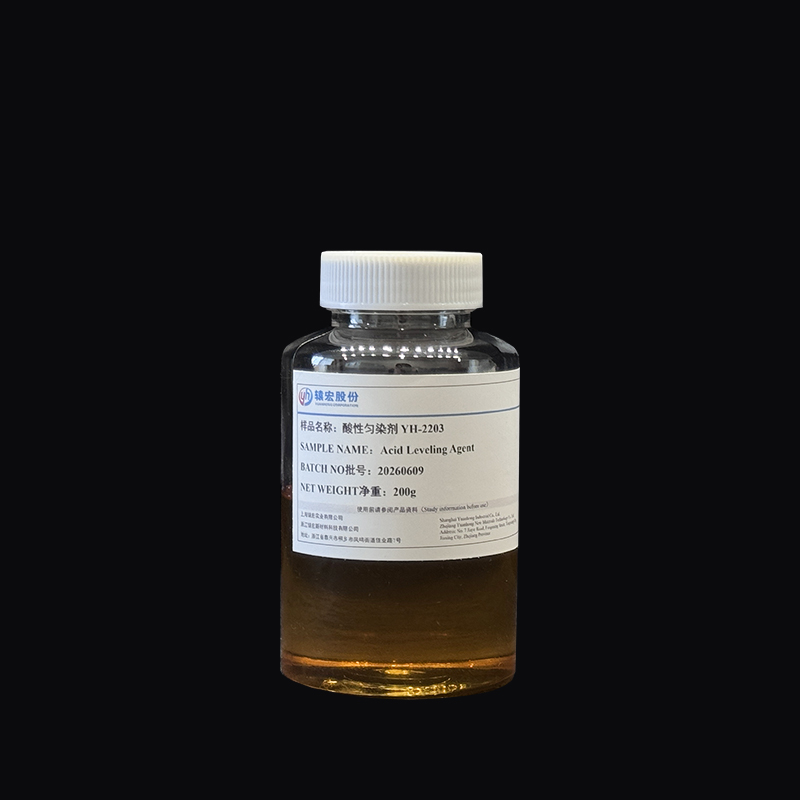 Acid Leveling Agent YH-2203 for Polyamide and Wool DyeingThis leveling agent helps control dye strike and promotes even shade buildup on nylon and wool, making it a practical choice for consistent results.View Product → for acid dye systems on nylon and the
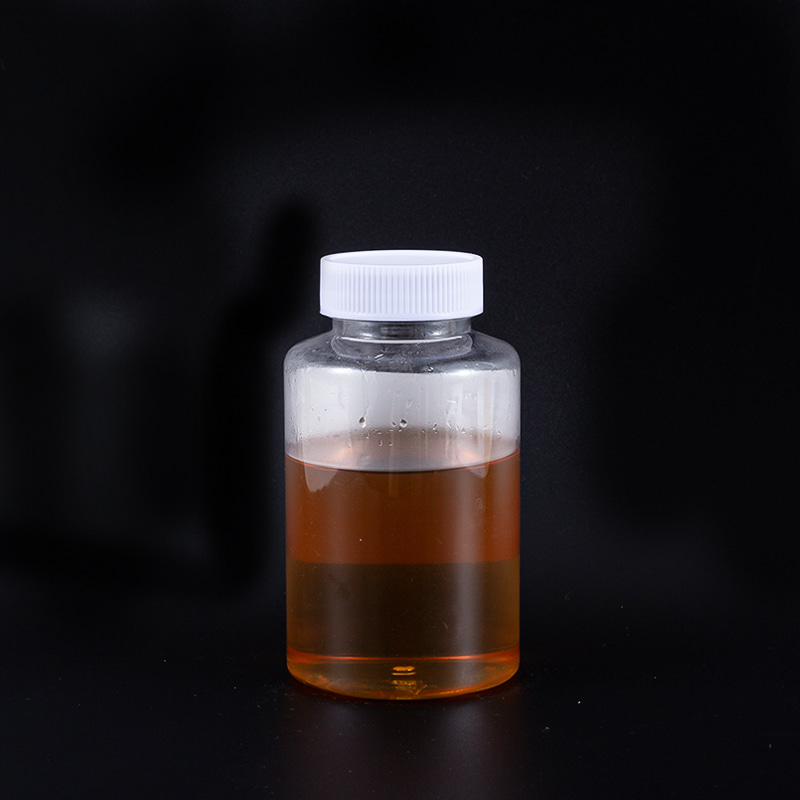 Cationic Leveling Agent YH-580H for Acrylic Fiber DyeingDesigned for acrylic dip dyeing, this agent provides strong retarding and migration properties while preserving color yield, ideal for blend applications.View Product → for cationic dye applications on acrylic fibers.
Preventing Defects: Anti-Crease and Lubricating Agents
Mechanical stress during dyeing is one of the most common causes of fabric defects. In rope dyeing machines, the constant folding and unfolding of fabric under heat and pressure can create permanent creases, especially in synthetic fibers and their blends. Anti-crease agents and lubricants form a protective film on the fiber surface, reducing friction and allowing the fabric to flex freely without developing crease marks.
These auxiliaries become particularly important for tightly woven, lightweight, or microfiber fabrics. The in-bath softener also helps improve the fabric hand feel after dyeing without affecting the shade or fastness. Using a tailored anti-crease strategy can reduce reworks and improve productivity significantly.
Cleaning and Soaping: The Key to Fastness
After dyeing, the fabric surface carries residual dye that is not chemically bonded to the fiber. If this unfixed dye remains, it will cause poor wash fastness, bleeding, and staining during downstream finishing. The soaping stage removes these loose dye particles while leaving the fixed dye undisturbed.
Choosing the right soaping agent depends on the dye class and fiber type. For cellulosic fibers dyed with reactive dyes, a multi-purpose soaping agent is usually effective at removing hydrolyzed dye. For nylon dyed with acid dyes, a dedicated nylon soaping agent can be more selective, avoiding the removal of the delicate dye-fiber bond.
A good soaping auxiliary also reduces the risk of staining other fibers in blends. In practice, a well-designed soaping step can lift fastness ratings by a full grade without additional fixing chemicals. The environmental benefit is relevant here too: effective soaping means less dye entering the wastewater stream, supporting the industry's move towards cleaner production. The textile chemicals sector is clearly shifting toward greener solutions, as discussed in industry news around fluorine-free and phenol-free transformation.
Fixing Agents and Fastness Improvers
Even after thorough soaping, some dye-fiber combinations simply do not achieve the required fastness by themselves. This is where fixing agents enter the picture. These chemicals bond with dye molecules within the fiber to reduce their solubility in water, improving resistance to washing, perspiration, and rubbing.
Fixers come in different chemistries depending on the dye class. For acid dyes on nylon, synthetic tannin-based fixers are the standard choice for wet fastness. For direct dyes on cotton, cationic or formaldehyde-free fixers are widely used. There has been a clear regulatory push to eliminate formaldehyde-based fixers, and most forward-thinking suppliers now offer low-formaldehyde or formaldehyde-free alternatives such as the 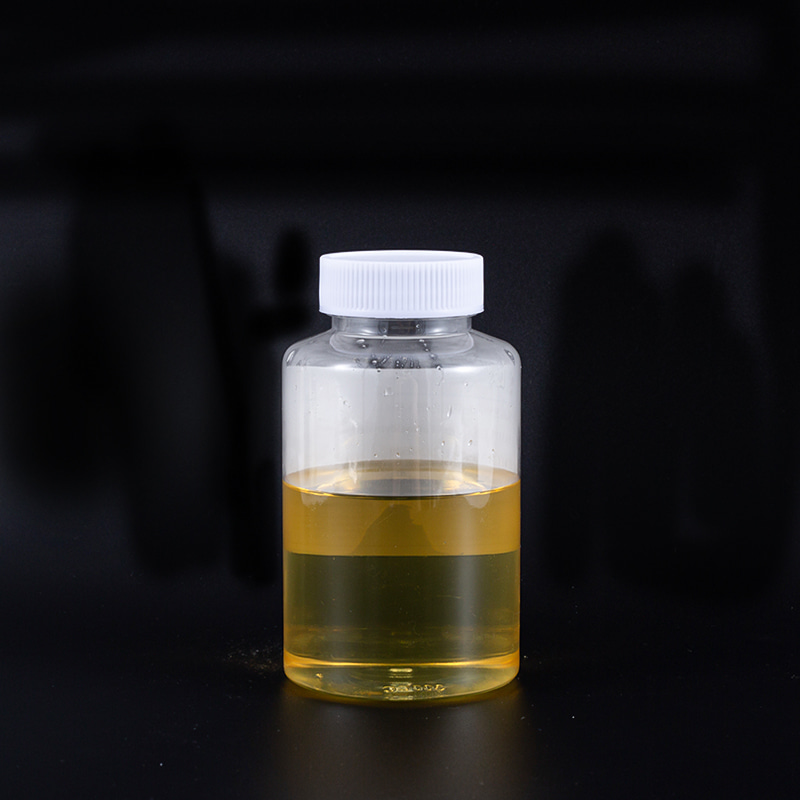 Formaldehyde-Free Color Fixing Agent YH-413 for Reactive DyesThis cationic fixer improves washing and hot water fastness on cellulosic fibers without affecting hand feel, meeting modern eco-friendly chemical requirements.View Product →. These deliver high fastness performance while meeting stricter textile chemical restrictions.
For dyehouses facing special challenges, fastness improvers can also be applied in a separate treatment step. Dry and wet rubbing fastness improvers, for example, are designed for deep shades where surface dye concentration is high. The key is to select a product that does not compromise the fabric hand feel or shade.
Selecting the Right Auxiliaries: A Supplier’s Practical Advice
With so many categories and trade-offs involved, developing a robust auxiliaries recipe requires more than just reading a product catalog. The interaction between auxiliaries, dyes, fibers, and machinery all influence the final outcome. Here are a few principles we have found helpful in years of working with dyehouses:
- Start with water quality: Test hardness, iron, and heavy metal content. A high-quality chelating dispersant such as YHECDA prevents metal ions from interfering with the dye bath.
- Match the auxiliary to the fiber: Nylon, polyester, cotton, and acrylic each need tailored chemistry. Using a generic leveling agent on the wrong fiber often leads to disappointing results.
- Consider the machine: Jet dyeing, winch dyeing, and jigger dyeing place different mechanical stress on fabric. Anti-crease requirements vary accordingly.
- Do not overuse fixers: Excessive fixing agent can affect the hand feel and even cause shade change. Start with the recommended dosage and adjust based on actual fastness testing.
- Validate with pilot trials: Always run a laboratory test before scaling up. This saves time, chemicals, and costly re-dyeing.
Toward a Smarter, More Sustainable Dyeing Process
The role of dyeing auxiliaries is evolving alongside broader shifts in the textile industry. Customers demand higher performance, stricter environmental compliance, and lower water and energy consumption. This is pushing auxiliary formulations toward multi-functional products that can combine leveling, lubrication, and pH control in one dose.
Digital process control is also enabling more precise use of chemicals, with automated dosing systems ensuring that the right amount of each auxiliary is added at the optimal moment. By working closely with a knowledgeable chemical supplier and investing in predictive process control, dyehouses can reduce re-dyes, improve reproducibility, and strengthen their market position.
At Shanghai Yuanhong Industrial Co., Ltd., we develop auxiliary systems with exactly these goals in mind: consistency, sustainability, and efficiency. Our entire lineup of textile auxiliaries, from dyeing chemicals to finishing agents, is designed to address real production challenges. If you are looking for a partner to help you optimize your dyehouse operations, we welcome the conversation.
-

4th Floor, Building A, Zhifu Building, No. 959 Qingfeng North Road, Tongxiang City, Jiaxing City, Zhejiang Province, China
-

135049973@qq.com
-

+86-13774367399
+86-19818384913

Products
Get In Touch
If you have any questions about our products, please feel free to contact us.
Copyright © Shanghai Yuanhong Industrial Co., Ltd. All Rights Reserved
Wholesale Textile Auxiliaries Chemicals Manufacturers
