

 English
  عربى
عربى 

Industry News
Home / News / Industry News / Green Transformation Accelerates in Textile Chemicals Industry, "Fluorine-Free & Phenol-Free" Becomes Industry Consensus
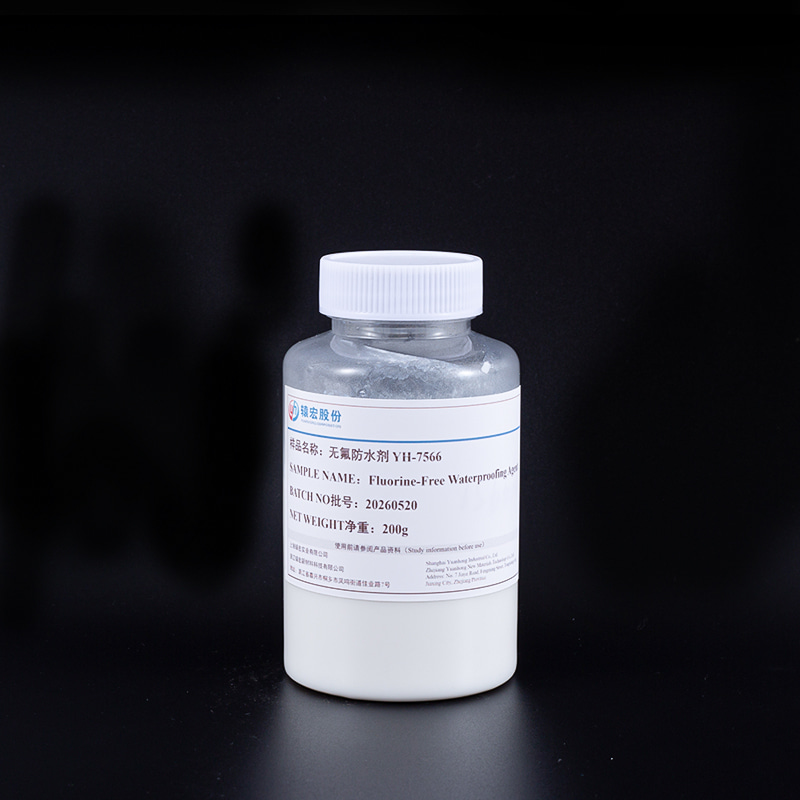
Green Transformation Accelerates in Textile Chemicals Industry, "Fluorine-Free & Phenol-Free" Becomes Industry Consensus
2026-06-26
Against the backdrop of tightening global environmental regulations and increasing brand requirements for supply chain sustainability, the textile chemical industry is accelerating its transition toward greener practices. At the 25th China International Dye Industry, Organic Pigments and Textile Chemicals Exhibition held in Shanghai in April 2026, "fluorine-free and phenol-free dyeing and finishing solutions" emerged as a key topic of industry focus.
Currently, regulations on PFAS (per- and polyfluoroalkyl substances) and phenolic compounds are moving toward stricter and more comprehensive standards. The EU REACH regulations continue to tighten, with comprehensive upgrades on PFAS and bisphenol controls, and brand RSL (Restricted Substances Lists) are constantly updated. The use and substitution of fluorine-containing and phenol-containing auxiliaries in textile printing and dyeing production has become a major concern across the industry chain.
In this context, the "Fluorine-Free & Phenol-Free Dyeing and Finishing Solutions and Practices Technical Seminar," co-hosted by the China Dyeing and Printing Association and Transfar Zhilian, was held during the exhibition. The "Green Chain Action — White Paper on Sustainable Transformation of Textile Chemicals" was officially released at the same time. The white paper systematically reviews outstanding practice cases in the green and sustainable transformation of the textile chemical industry, providing a reference framework from five dimensions: "green sourcing, green technology, green manufacturing, green closed-loop, and green collaboration," offering a replicable and actionable transformation guide for the entire industry.
Industry insiders point out that green transformation has shifted from an "option" to a "must." Chemical auxiliaries and solutions that help dyeing mills achieve carbon reduction, water savings, and emissions reduction are becoming a new competitive frontier.
-

4th Floor, Building A, Zhifu Building, No. 959 Qingfeng North Road, Tongxiang City, Jiaxing City, Zhejiang Province, China
-

135049973@qq.com
-

+86-13774367399
+86-19818384913

Products
Get In Touch
If you have any questions about our products, please feel free to contact us.
Copyright © Shanghai Yuanhong Industrial Co., Ltd. All Rights Reserved
